
The Silver Appleyard is one of the best all-around duck breeds you can raise. Developed as a dual-purpose breed, it combines excellent egg production with a large, meaty body and beautiful appearance. If you want ducks that are productive, friendly, and beautiful, the Silver Appleyard deserves a place near the top of your list.
At a Glance
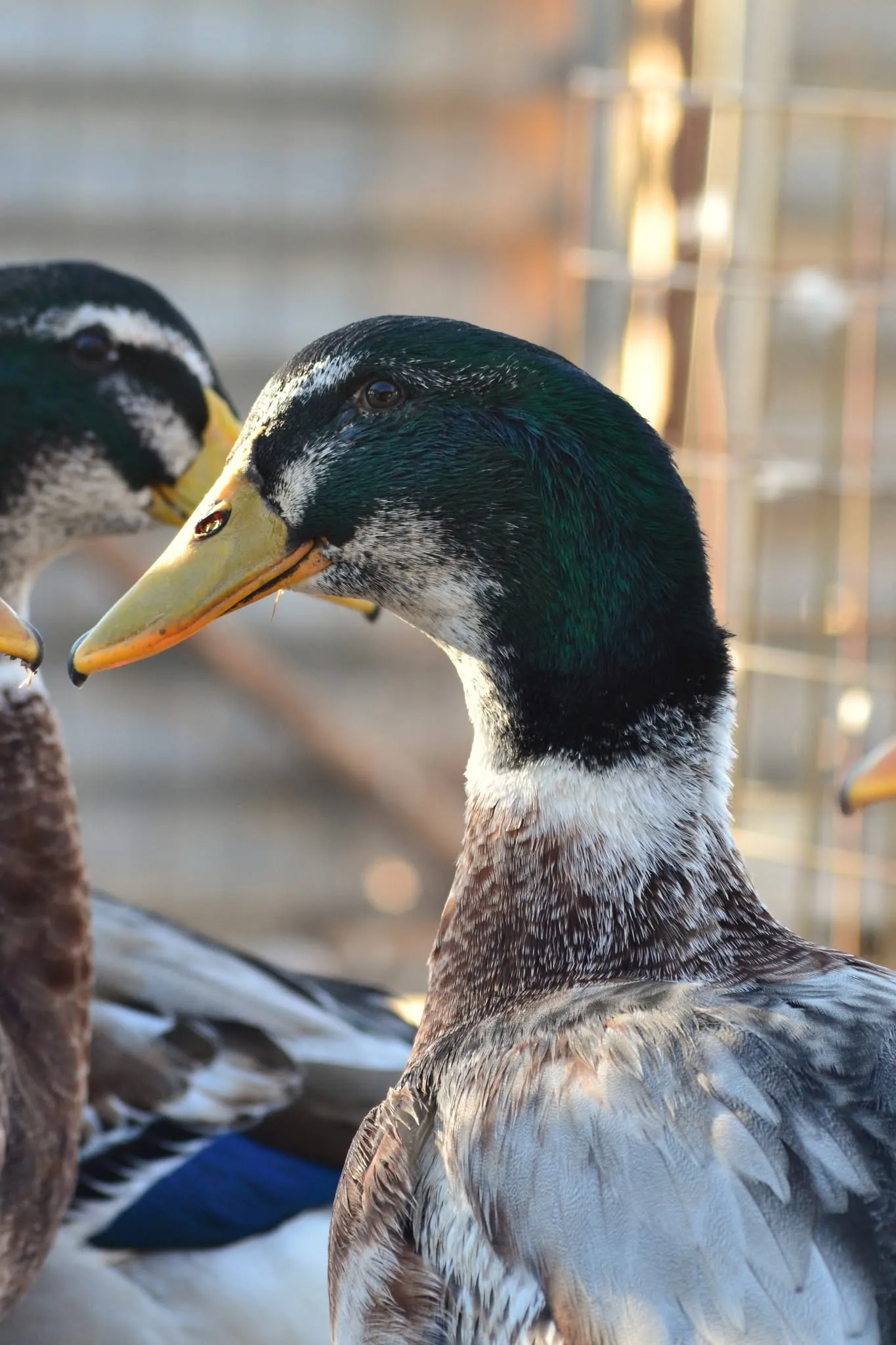
A Silver Appleyard drake. Photo used with permission from Sundance Stud.
Origin: England, 1930s
Utility: Dual-purpose (eggs and meat)
Size: Heavy
Drake weight: 8–9 lb (3.6–4.1 kg)
Duck weight: 7–8 lb (3.2–3.6 kg)
Egg production: 200–270 large white eggs per year
Egg color: White
Temperament: Calm, docile, active
Conservation status: Watch
Characteristics
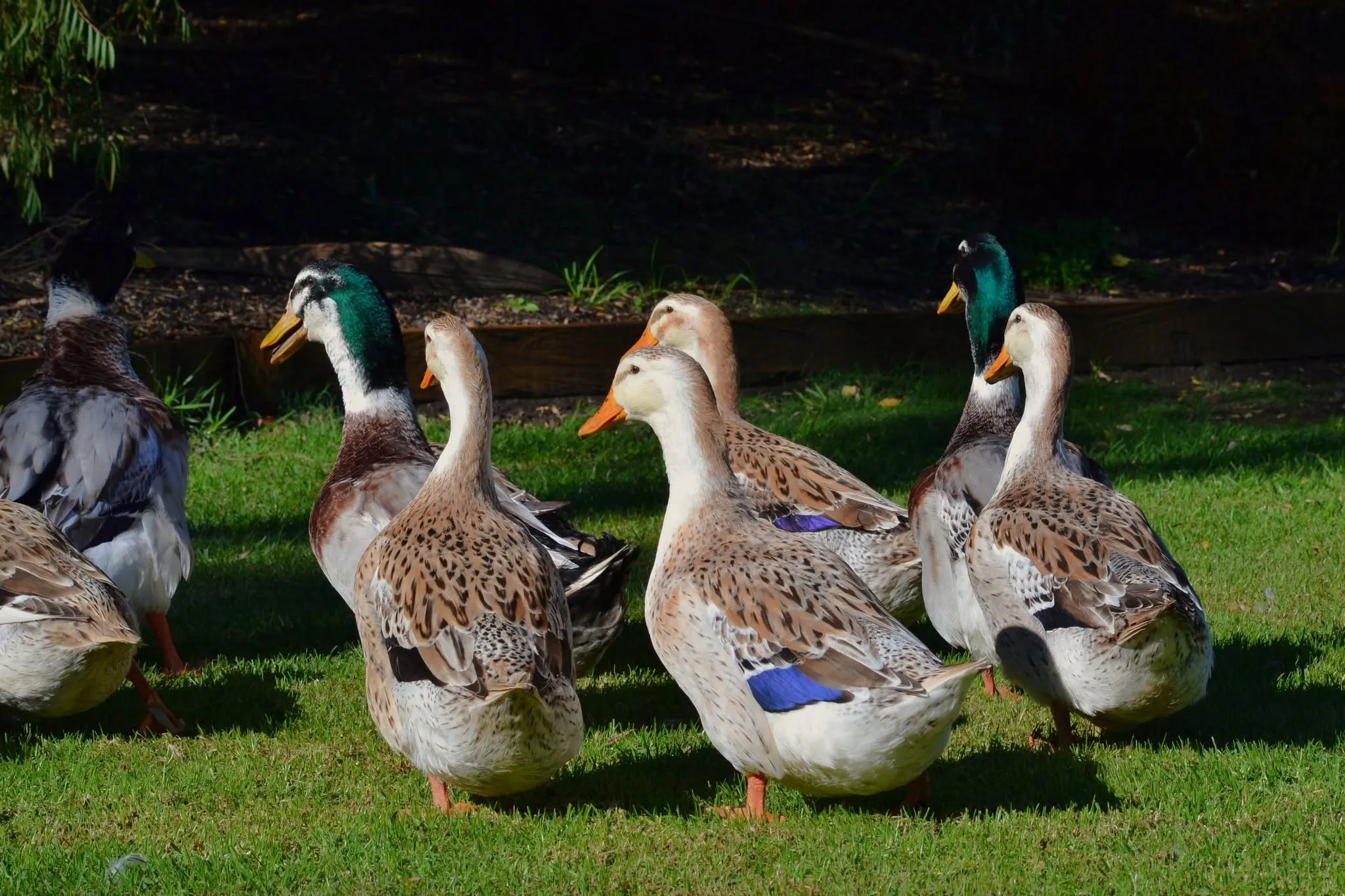
A flock of Silver Appleyard ducks. Photo used with permission from Sundance Stud.
One of the biggest advantages of the Silver Appleyard is that it’s an outstanding layer for such a large breed. Most ducks lay somewhere between 200 and 270 large white eggs each year, making them one of the best egg producers of the heavyweight duck breeds, although some sources report they lay less. They usually begin laying at around five to seven months of age.
Silver Appleyards are generally on the calm, friendly side compared to some other duck breeds. They’re active enough to be good foragers, but they aren’t usually as flighty or nervous as lighter breeds. They’re reportedly very cold-hardy (this Redditor says they “take on the cold as though they descend from actual balls of snow”). Like most heavy ducks, Silver Appleyards usually fly very poorly. They tend to be moderately noisy.
Appearance
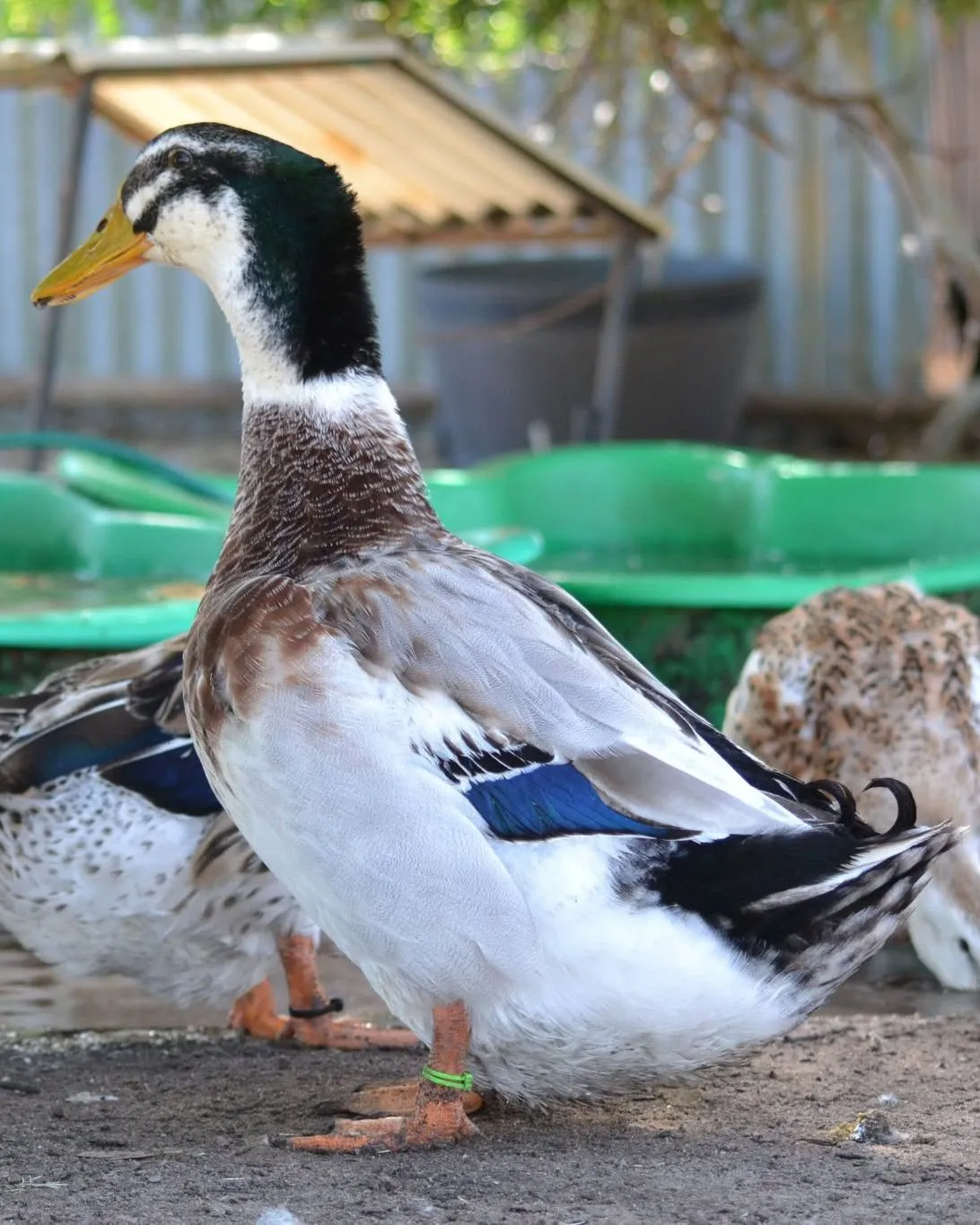
A silver Appleyard drake. Photo used with permission from Sundance Stud.
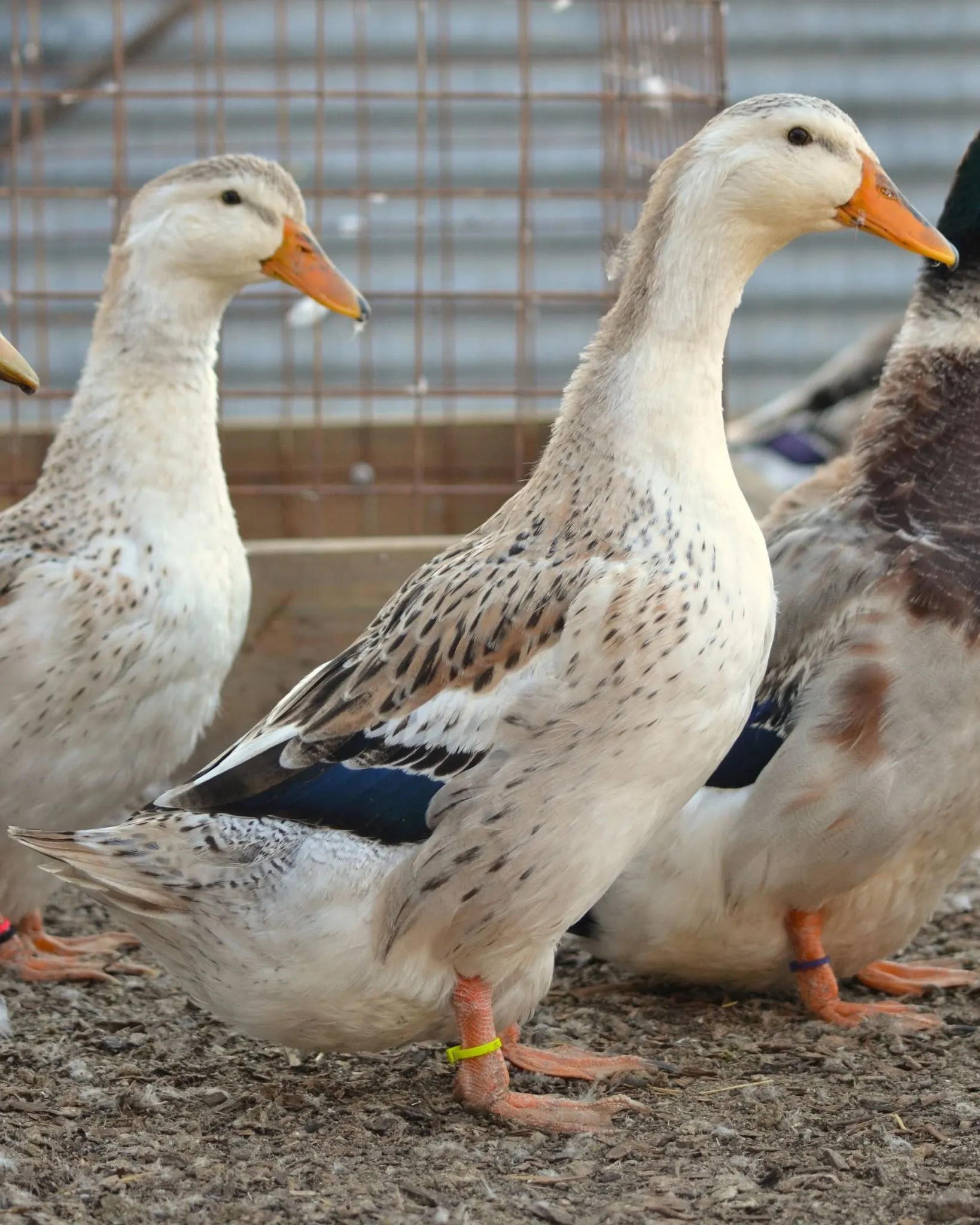
A female Silver Appleyard. Photo used with permission from Sundance Stud.
Silver Appleyards are possibly among the prettiest domestic duck breeds. Drakes have glossy green heads with whitish throats, as well as a white neck ring, and tend to gain more silver or white on their heads as they age. They have rich chestnut breasts with delicate white lacing, a creamy belly, and bright blue wing speculums. Their bills are yellow-green with a dark bean on the tip.
Female ducks are much softer in color. They have creamy-white faces with distinct brown eye stripes, along with beautiful blends of buff, silver, gray, and white across the rest of the body. They have yellow bills. Like the drakes, they have brilliant blue wing speculums. Both sexes have orange legs and broad, deep bodies carried 15-25 degrees above horizontal. They are large, robust ducks, weighing 7-9 pounds.
History
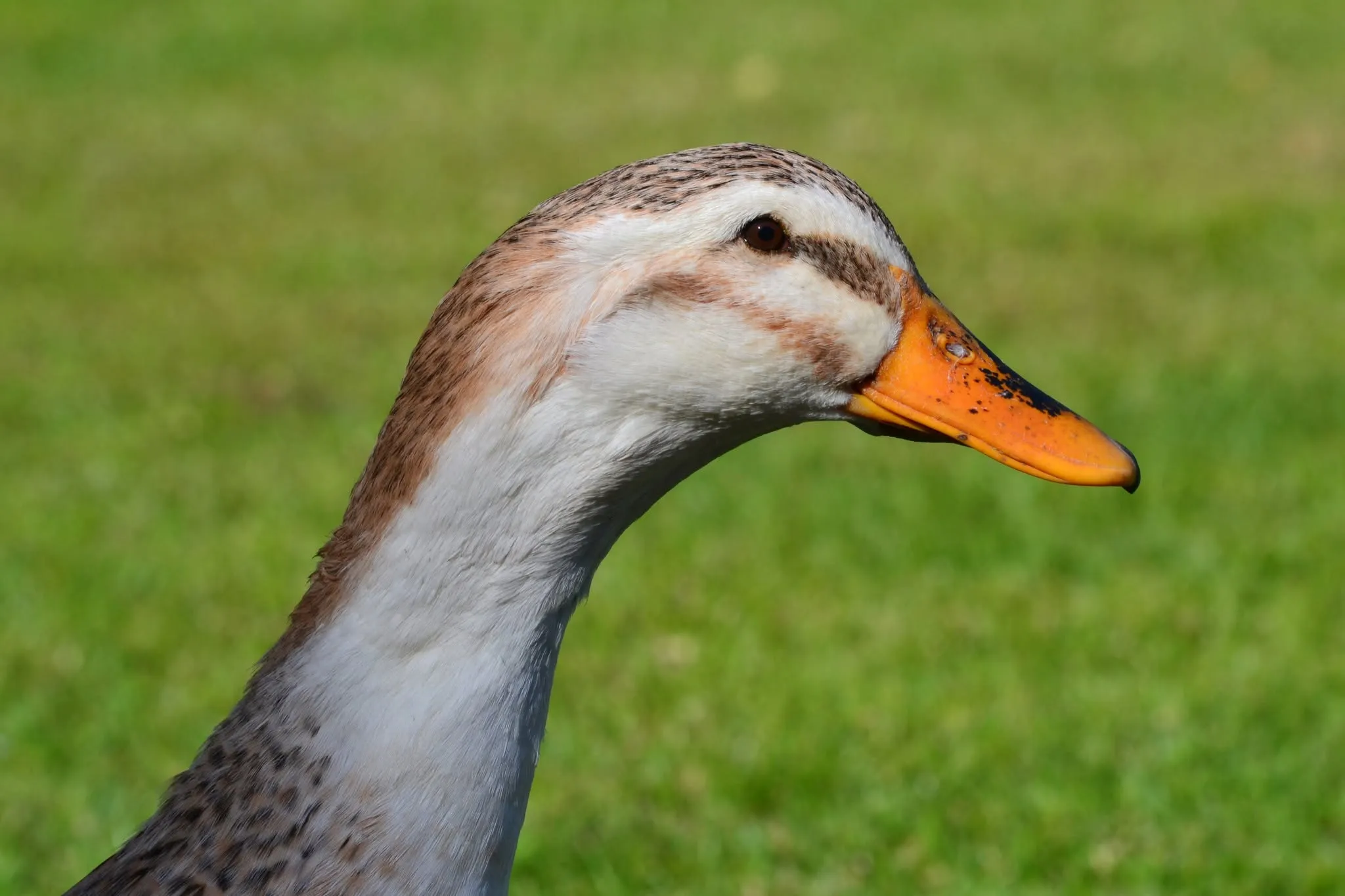
Photo used with permission from Sundance Stud.
The Silver Appleyard is a heritage breed, developed in Suffolk, England during the 1930s by British poultry breeder Reginald Appleyard, who also created the Ixworth chicken. His goal was to produce the ideal farm duck: one that laid plenty of large white eggs, grew quickly into a quality table bird, had attractive white skin after processing, and was beautiful. After World War II, Silver Appleyards had nearly disappeared, but were revived around the 1980s by Tom Bartlett in Gloucestershire, who also created the Silver Appleyard Miniature. They were entered into the British Poultry Standard in 1982.
Silver Appleyards made it to the United States in the 1960s, but weren’t accepted into the American Poultry Association’s Standard of Perfection until 2000. Currently, they are classified as “Watch” by the Livestock Conservancy, meaning the estimated global population is less than 10,000.
Is the Silver Appleyard Right for You?
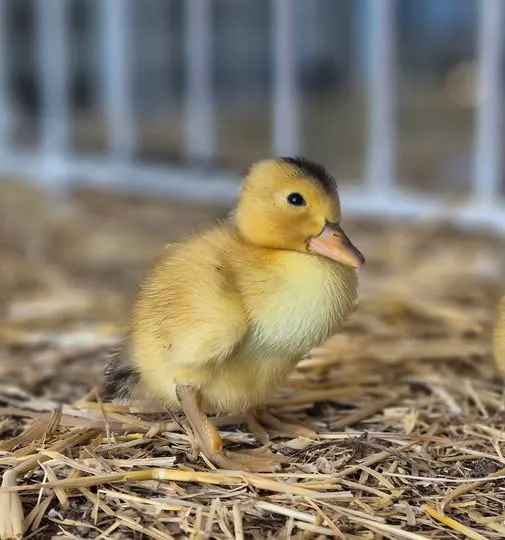
A Silver Appleyard duckling. Photo used with permission from Sundance Stud.
If you want one duck breed that does almost everything well, the Silver Appleyard is hard to beat. They’re one of the most ideal dual-purpose ducks, both laying an impressive amount of eggs and also being large and fast-growing. They’re a heritage breed worth breeding and maintaining as well. Harvey Ussery recommends Silver Appleyards in his (fantastic) book, The Small-Scale Poultry Flock, saying they’re his favorite breed of duck, because they’re not only good for both meat and eggs, but are also beautiful, able to forage well, and able to reproduce without the help of incubators. For homesteads, small farms, and backyard flocks alike, the Silver Appleyard is one of the best all-around choices. If you like the idea of the Silver Appleyard but want something more compact, there’s also a true miniature version, about a third of the size; you can read more about that one in my Silver Appleyard Miniature guide.
Leave a comment
Your email address will not be published.